Did you know that without pollinators like bees, butterflies, and even bats, much of the forest life in Costa Rica (and our food sources like fruits and veggies elsewhere in the world) would disappear?
These small but mighty creatures play a crucial role in maintaining the lush, ecosystems rich in biodiversity that make Costa Rica so unique.
Why pollinators are essential for reforestation and biodiversity
Pollinators are nature’s matchmakers. They move pollen from flower to flower, allowing plants and trees to reproduce. In tropical regions like Costa Rica, up to 90% of flowering plants depend on animal pollinators! That means bees, hummingbirds, butterflies, moths, and even beetles and bats are responsible for helping forests regenerate and thrive.
In reforestation projects, planting trees is only the beginning. Without pollinators, these young ecosystems can’t mature into self-sustaining forests. That’s why helping pollinators isn’t a side mission—it’s central to restoring nature.
Who are the pollinators of Costa Rica?
Costa Rica is home to:
- Over 700 species of bees (including stingless native bees)
- Dozens of butterfly and moth species
- Hummingbirds like the dazzling Rufous-tailed Hummingbird
- Nectar-loving bats that pollinate at night
- Beetles, wasps, and ants, many ants!
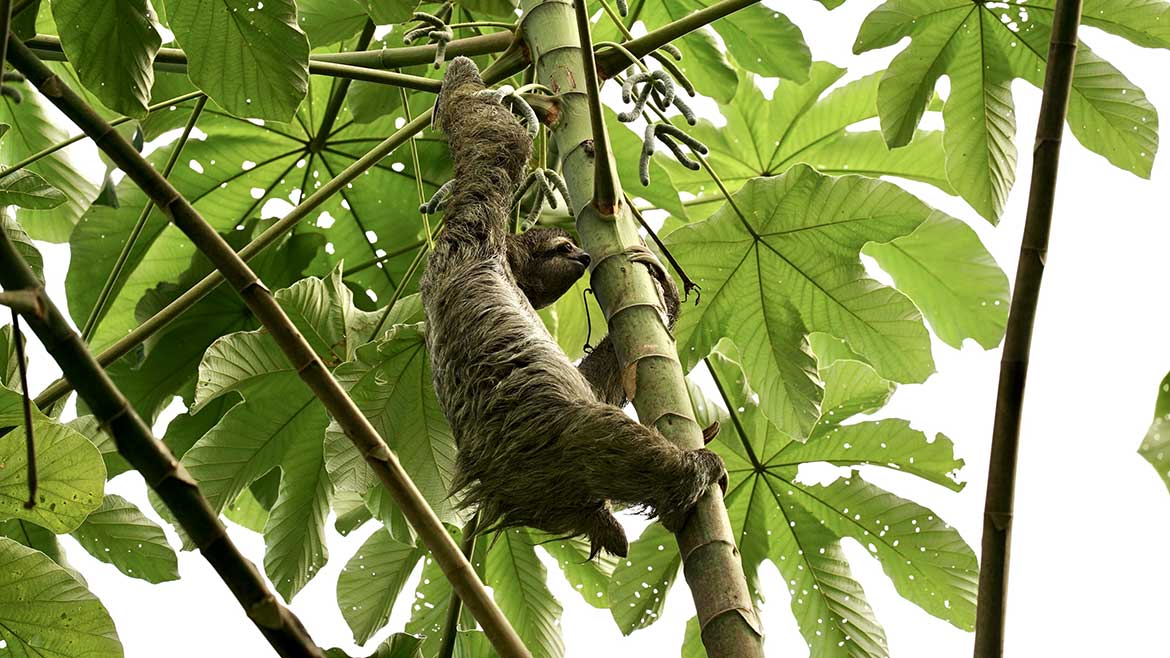
Each of these species plays a specific role in pollinating native plants that feed birds, monkeys, sloths,
and humans alike.
How to help pollinators in Costa Rica?
1. Plant native flowers
For the expats in Costa Rica: choose plants that are native to your region. In Costa Rica, species like Heliconia, Verbena, and Guaria Morada (Costa Rica’s national flower) are excellent for attracting pollinators.
Native plants are the foundation of any healthy ecosystem. Over thousands of years, pollinators have evolved alongside local plant species. This means native flowers are often richer in the nectar and pollen that local bees, butterflies, and hummingbirds depend on. They also bloom at the right time to feed pollinators when they need it most. By planting native flowers, you’re essentially laying out a welcome mat for pollinators.
Here are a few native (or well-adapted) species that are perfect for feeding and sheltering pollinators:
Garden tips
- Diversity is key: Try to plant a variety of species that flower at different times of the year.
- Go for clusters: Group several of the same plant together. This makes it easier for pollinators to find them and saves energy as they forage.
- Leave some wild space: Don’t be afraid to let a corner of your garden grow a bit wild. Many native pollinators thrive in more natural, less manicured spaces.
If you have a garden at your rental home, ecolodge, or finca, ask local nurseries or neighbours for “plantas nativas para colibríes y mariposas.” Many viveros (nurseries) stock pollinator-friendly natives if you ask!
2. Avoid pesticides: protect the pollinators, protect the planet
One of the biggest threats to pollinators today isn’t habitat loss—it’s what’s on the habitat. Pesticides, herbicides, and fungicides (even the “natural” ones) can be lethal to bees, butterflies, and other beneficial insects.
Why are pesticides so harmful to pollinators?
- Neonicotinoids, one of the most common pesticide groups used worldwide, are especially toxic to bees—even in small amounts.
- Many pesticides affect the nervous system of pollinators, disorienting them so they can’t find their way back to their nests or hives.
- Residues on flowers, leaves, and soil can persist for weeks, poisoning pollinators slowly over time.
- Even fungicides and “organic” sprays can interfere with the gut microbiomes of bees, making them more vulnerable to disease.
The reality is: what kills pests often harms pollinators too. That’s why reducing or eliminating chemical use in your garden is one of the most powerful ways to help.
What you can do instead?
Companion planting is an ancient method uses the natural properties of plants to repel pests and attract beneficial insects.
- Marigolds: Repel nematodes and aphids.
- Lemongrass, basil: Keeps mosquitoes and whiteflies away.
- Lavender and rosemary: Deter moths and beetles while attracting bees.
- Nasturtiums: Lure aphids away from other plants (a “trap crop”).
Companion planting also makes your garden more diverse, which naturally supports pollinators.


3. Create a pollinator-friendly garden — a safe haven for nature’s little gardeners
Pollinators don’t just need flowers—they need a complete, safe habitat. By creating a pollinatorfriendly garden, you’re providing a mini-sanctuary where bees, butterflies, and hummingbirds can feed, nest, drink, and rest. Even a small garden or balcony can become a buzzing hotspot if you nclude a few key elements.
Add a water source (but make it pollinator-safe!) Pollinators, especially butterflies and bees, need fresh water—but they can’t land safely on deep water like birds can.
How to make a bee & butterfly watering station:
- Use a shallow dish or saucer.
- Fill it with pebbles, marbles, or small stones.
- Add just enough water so that the tops of the stones stay dry—this gives insects a safe place to land and drink.
- Change the water daily to prevent mosquitoes from breeding.
You can also create mud puddles for butterflies! Some species (like the beautiful Blue Morpho) get essential minerals from damp soil.
Leave a patch of bare soil (for the ground dwellers)
Not all bees live in hives! In fact, around 70% of native bees nest underground, especially solitary species like the gentle, stingless bees found in Costa Rica.
- Leave a small area of bare, undisturbed soil in a sunny spot.
- Don’t mulch or cover it with stones.
- Avoid digging in that area, and keep it pesticide-free.
This simple gesture provides vital nesting habitat that often gets overlooked in manicured gardens.
Plant flowers that bloom year-round or in succession
Pollinators need consistent food sources throughout the year, not just in one blooming season. Many people plant flowers that all bloom at once, which is beautiful but not very helpful when those blooms fade.
- Mix species that bloom in early, mid, and late seasons.
- Choose plants with different flower shapes, sizes, and colors to attract a variety of pollinators.
- Include trees and shrubs as well as herbs and wildflowers—some pollinators prefer height, others stay low to the ground.
Year-round bloomers in Costa Rica:
- Hamelia patens (Firebush): Almost always in bloom.
- Lantana camara (Siete Colores): Constant source of nectar.
- Verbena species: Excellent for butterflies.
- Ixora coccinea (Jungle Geranium): Loved by bees and hummingbirds.
- Bougainvillea: While not a primary nectar source, it provides shelter and attracts some butterflies.
Other garden features that support pollinators:
- Native grasses: Provide overwintering shelter for insects.
- Deadwood or tree stumps: Offer nesting space for solitary bees and beetles.
- Clumping plants: Group the same species together — this makes foraging more efficient for pollinators.
- Avoid heavy pruning: Let plants go to seed when possible — many insects feed on seeds and dried flowers.
Urban or balcony gardener? No Problem!
Even if you don’t have land, you can:
- Use pots or hanging baskets with pollinator-friendly plants.
- Place window boxes with herbs like basil, oregano, and lavender.
- Make a mini water dish and add native flowers to your railing planters.
From garden to ecosystem
When many people create small pollinator habitats, they become stepping stones across the landscape. Together, they form what ecologists call a “pollinator corridor”—a lifeline that allows bees, butterflies, and other insects to move, feed, and breed across otherwise fragmented spaces.
4. Support our project and our little helpers
By adopting a tree through our reforestation project WILDLIFE FRUITS, you’re not just planting a tree —you’re helping create habitat and food for hundreds of pollinators.
Reforesting a piece of land is a big job—but thankfully, we’re not the only ones doing the work.
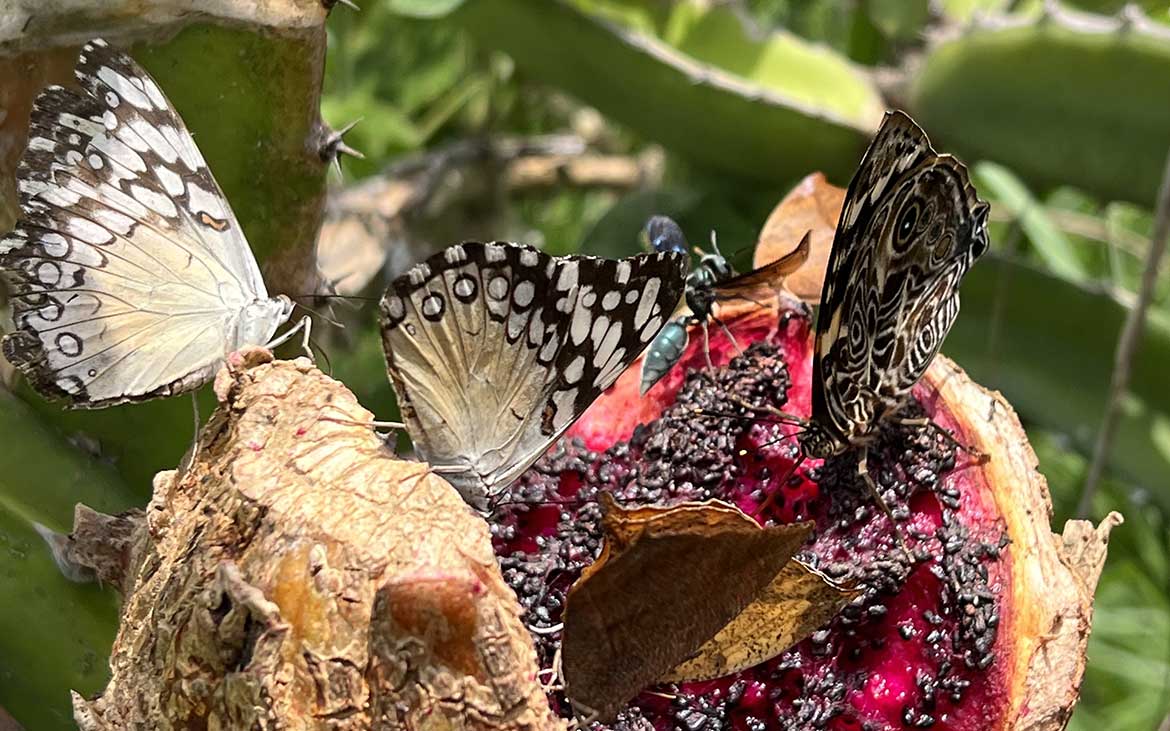
Our reforestation zone sits on what was once a pitaya (dragonfruit) plantation. The old pitaya plants still remain, flowering quietly among the young trees. These blooms have become an irresistible invitation for pollinators—our secret little helpers.
Bees, moths, butterflies, bats, and even hummingbirds are now visiting the area, drawn by the nectar-rich flowers of the dragonfruit. While we plant trees, they’re busy doing their part: spreading pollen, supporting plant reproduction, and helping rebuild a healthy, biodiverse ecosystem.
Pollinators aren’t just welcome guests—they’re essential partners in restoring balance to this land.
Pollinators & dragonfruit: a nighttime love story
Did you know that without pollinators, you wouldn’t be enjoying that vibrant pink dragonfruit in your smoothie bowl?
Dragonfruit (pitaya) grows on a species of cactus (Hylocereus) and produces large, stunning white flowers—but here’s the catch: They only bloom at night. This means nighttime pollinators like bats and moths play a critical role in helping the flowers turn into fruit.
Who pollinates dragonfruit?
- In the wild (and in tropical gardens), nectar-feeding bats are the primary pollinators.
- Large hawkmoths may also assist when bats are absent.
- In commercial farms, hand-pollination is often required—unless you have healthy pollinator populations nearby!
This is a perfect example of how reforestation and supporting pollinators are directly linked to food security and biodiversity.
Let’s plant for pollinators and biodiversity
Reforestation is more than just trees—it’s about restoring entire ecosystems and increase biodiversity. When we protect pollinators, we protect the web of life that connects plants, animals, and people.
So whether you’re growing a few flowers on a balcony or helping reforest a tropical valley, remember: you’re part of a global movement to give nature a hand.
Adopt a tree. Increase biodiversity. Plant a garden. Rewild nature. Be a pollinator hero!
Share This Story, Choose Your Platform!
STAY IN THE LOOP
Subscribe to our free newsletter.
[fusion_form form_post_id=”4569″ margin_bottom=”0″ hide_on_mobile=”small-visibility,medium-visibility,large-visibility” /]