A pioneer tree powering biodiversity in Costa Rica
In the lush landscapes of Costa Rica, few trees are as emblematic of regeneration and biodiversity as the guarumo (Cecropia spp.). These fast-growing trees are ecological trailblazers—literally. As pioneer species, they are among the first to colonize disturbed or deforested areas, setting the stage for entire forests to return.
A natural ally for reforestation
In the vibrant tropical landscapes of Costa Rica, where misty mountains and lush lowlands teem with life, one tree stands out not for its grandeur, but for its pioneering spirit: the guarumo (Cecropia spp.). Known for its broad, palmate leaves and upright silhouette, this fast-growing tree plays a surprisingly outsized role in bringing degraded land back to life.
Nature’s first responder
Guarumo trees are classified as pioneer species—plants that are among the first to colonize areas that have been disturbed by logging, agriculture, or natural disasters. When land is laid bare, the sun blazes down on dry, compacted soils, and biodiversity struggles to return. But this is where the guarumo thrives, making it a perfect candidate for kickstarting reforestation efforts. Its broad leaves form a high canopy that shades and enriches the soil below, helping create a more hospitable environment for slower-growing native trees. Guarumos acts like scaffolding for the future forest.
It germinates quickly in open sunlight, sending roots deep into damaged soils. Its fast growth provides early shade, stabilizes the land, and helps restore microclimates essential for other, more delicate species to take root. In essence, the guarumo paves the way for forest succession —the natural process through which ecosystems regenerate over time.
Ecological engineering at its best
But the guarumo doesn’t just “show up first”—it builds conditions for others to follow. Its broad leaves create a leafy canopy that helps cool the forest floor, reduce evaporation, and add organic matter back to the soil as they fall. It’s a natural soil builder, water protector, and biodiversity enabler all in one.
As a result, in the early years of reforestation, guarumo trees act like ecological scaffolding: temporary yet crucial structures that support the emergence of more complex, long-lived rainforest systems.
For reforestation initiatives like ours—focused not only on replanting trees but on restoring ecosystems for wildlife and biodiversity — the guarumo is a key player. It helps us:
- Jump-start ecological recovery on abandoned or eroded lands
- Attract wildlife early, creating habitat that draws birds, mammals, and insects
- Accelerate natural succession, making space for a greater diversity of native species
By planting guarumo trees, we’re not just covering bare soil—we’re setting a foundation for life to return. Each sapling becomes an invitation for the forest to heal, for animals to return, and for ecosystems to reestablish their rhythm.
A Magnet for Wildlife
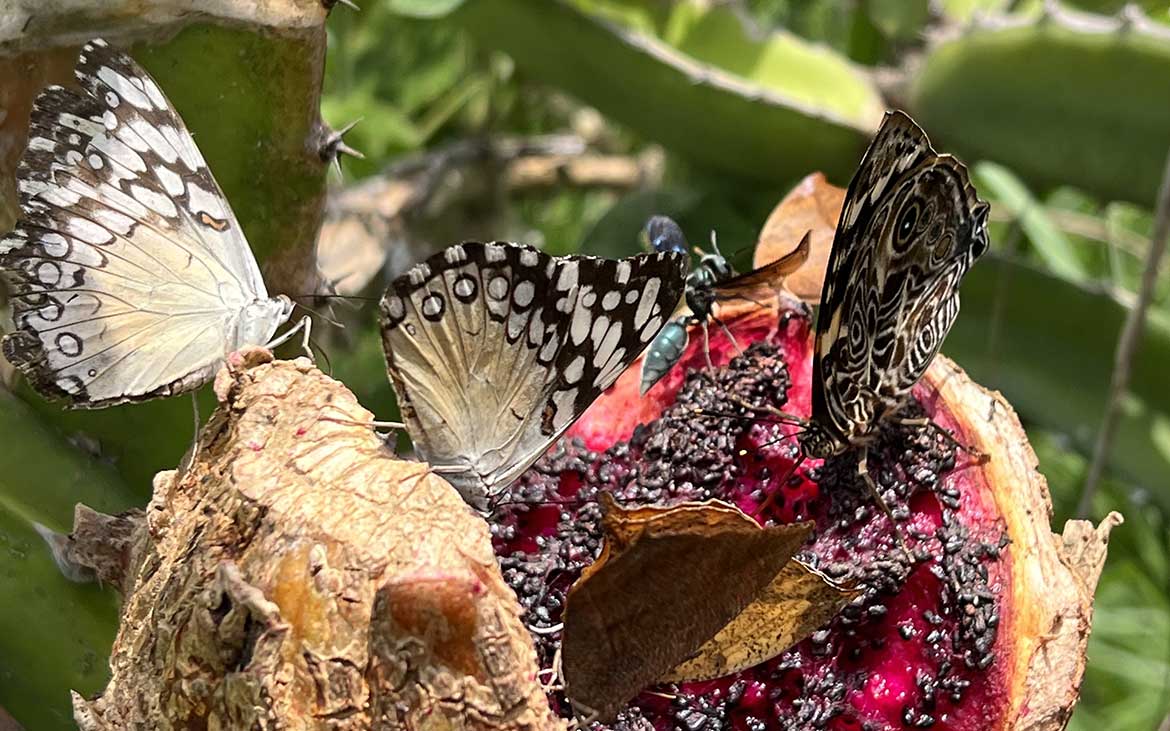
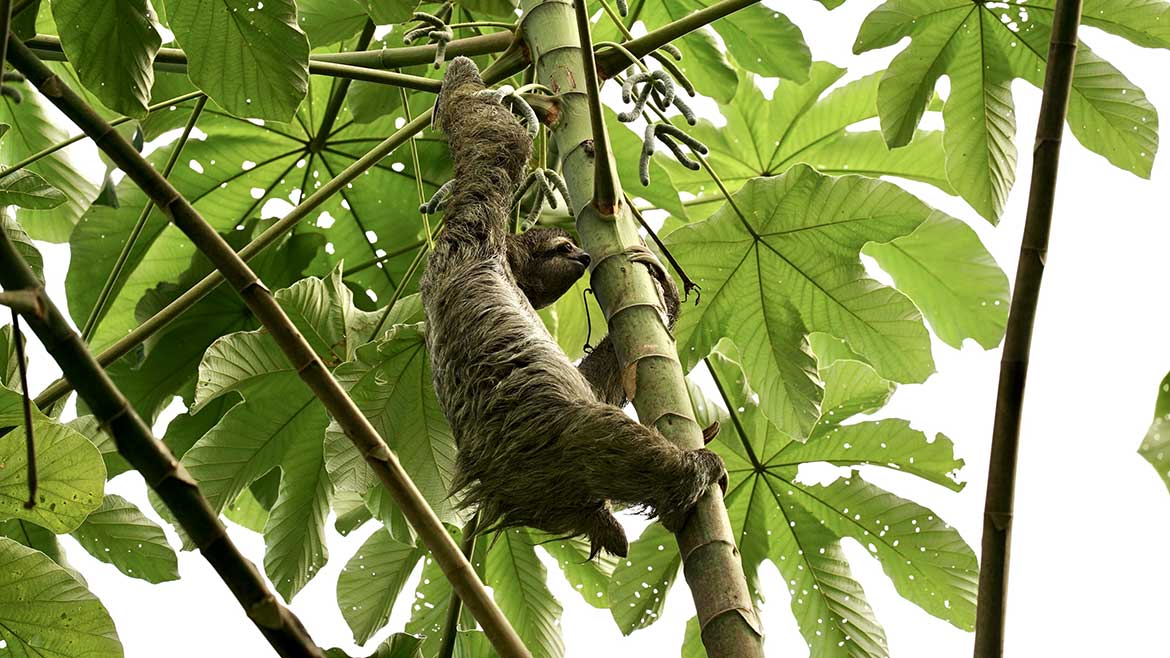
Beyond its botanical strengths, the guarumo tree is a wildlife magnet. Its hollow stems and large leaves offer shelter, and it produces a steady supply of fruits that attract a variety of animals.
Just a few of its frequent visitors include:
In Spanish, the guarumo is called “El restaurante del bosque” (“The forest restaurant”), which aptly explains its key role in nature and biodiversity.
A Closer Look at the Guarumo Tree
The guarumo is an architectural wonder of early tropical forests. It can grow remarkably fast, often reaching 5 to 15 meters tall within just a few years, making it one of the most efficient trees for regenerating cleared or degraded land. Its slender, grayish trunk is usually hollow, which reduces weight and makes space for mutualistic ants—a unique defense strategy against herbivores.
Its most recognizable feature is its large, umbrella-like leaves, often 20 to 40 centimeters wide, divided into multiple lobes (typically 7–11), with a silvery underside that gives the canopy a shimmering look when the wind blows. These leaves are soft, short-lived, and fall regularly, enriching the soil with organic matter and encouraging microbial activity.


The guarumo’s flowers are small and relatively inconspicuous, but they appear in cylindrical spikes from the base of the leaf stems. The species is dioecious, eaning that male and female flowers grow on separate trees. Pollination is typically carried out by wind or small insects.
Once pollinated, female trees produce clusters of soft, finger-like fruits—technically a compound fruit formed from many tiny flowers. These fruits are nutrient-rich, high in sugars, and available yearround, making them a reliable food source for wildlife. Inside each fruit are numerous tiny seeds, which are dispersed by bats, birds, monkeys, and other frugivores, enabling the tree to colonize new areas quickly.
Guarumo seeds germinate readily in disturbed soils with abundant sunlight. Their seedlings grow straight and tall, prioritizing height over girth, which helps them outcompete grasses and quickly establish a canopy in open environments.
Potential challenges
The Guarumo is a powerful ecological tool, but like any pioneer species, it’s most effective when used strategically and in combination with other native trees. In a well-designed restoration project — such as yours — it plays a vital early role but should be part of a broader vision for long-term forest diversity and structure.
Kick-starting life
In our reforestation project, we see guarumo not as a silver bullet, but as a strategic starter—a species that creates momentum. By combining it with slower-growing hardwoods, fruit-bearing natives, and mid-successional species, we build forests that are not just fast to grow, but rich in structure, function, and wildlife habitat, encouraging a balanced biodiversity.
The guarumo helps open the door—but it’s the diversity behind it that keeps the forest alive.
Planting guarumo is not just about trees—it’s about rebuilding complex, interwoven habitats where wildlife can thrive. Each guarumo we plant brings us closer to our goal of restoring a biodiversity corridor and a resilient ecosystem.
By selecting pioneer species like the guarumo, we ensure that our reforestation strategy doesn’t just fill space—it breathes life back into it.
Imagine planting the first tree in a future rainforest. A tree that invites monkeys, birds, and butterflies back to a once-barren landscape. A tree that helps sloths nap in peace and toucans feast in the canopy. That tree is the guarumo—and it’s waiting for you.
By adopting a guarumo, you’re not just planting a tree. You’re kick-starting life, creating a safe haven for wildlife, and helping Costa Rica’s forests grow back stronger and more biodiverse than ever.
One tree helping thousand of lives.
Adopt a guarumo today—and grow a forest for tomorrow.
Share This Story, Choose Your Platform!
STAY IN THE LOOP
Subscribe to our free newsletter.
[fusion_form form_post_id=”4569″ margin_bottom=”0″ hide_on_mobile=”small-visibility,medium-visibility,large-visibility” /]